News & issues
If you want to know what is currently occupying the minds of our team of talented architects, town planners, lawyers, communicators, cultural advocates and community activists then you've come to the hot spot for what is happening in Paddington right now:
LATEST UPDATE... The Scottish Hospital Redevelopment
Following
attendance at the Open Day and Workshops conducted by the Presbyterian Aged
Care (PAC) on 1st, 3rd and 4th May 2010
Background The Scottish Hospital includes the gardens and original house The Terraces, one of the ten Gentry Villa subdivisions granted by
Governor Bourke in the 1830s.
The Terraces is the only remaining
Gentry Villa house and grounds in Paddington, with the exception of a small segment of Engehurst on Ormond Street. All the
others have been demolished.
The only other villa from this period is Juniper
Hall. It still stands, but on a block that is a fraction of the original 100 acre grant.
Later additions in the grounds include the AC Mackie Nursing Home on Brown
Street and the theatre addition on Stephen Street.
The 1.47 hectare site, house, grounds and some trees are heritage listed in the
Woollahra LEP 1995. In 2001 a tree assessment identified some 88 major trees/species of the some
140 trees on the site. In 2002 Woollahra Council conditionally approved an aged care development on
the site, retaining the existing buildings adding two
setback floors to the 4 floor nursing home and creating new 2 storey buildings. It incorporated 24
self-care apartments and some 190 aged care beds, and a basement car park for about 70 cars.
Council assessed the floor space
for the approved application as some 13,600 sqm with a project cost of about $23m.
The National Trust, The Paddington Society and local residents objected to the
impact of the proposal on the Scottish Hospital, its
site, its trees, its grounds, views to the site and views from the site.
A new proposal Presbyterian Aged Care (PAC) has developed
new plans for the site to include a 105 bed residential aged care facility and 90 seniors’
self- care apartments with community facilities, ancillary care services and some 150 cars parked on the
Scottish Hospital site.
Various options have suggested
buildings ranging up to 10 floors on the Scottish Hospital site. The two very high 1960s buildings on
Glenmore Road above the Scottish Hospital and on Stephen Street adjacent to the Scottish Hospital are each
8 floors above a floor of car parking. These buildings are completely out of scale and character with the
Victorian terraces of Paddington and their form should not be repeated in Paddington.
Note: the ground level at the Scottish Hospital car park is approximately RL 15m,
and Cooper Street is approximately RL 30m; the 4 floor AC Mackie building roof
is approximately RL 29.5m. The apartment building parapet of No 40 Stephen Street is approximately RL 42.5m and the plant room is probably 6m higher.
The Paddington Society supports
the continuing use of Aged Care on the Scottish Hospital site.
The Paddington Society is very
concerned as the new proposal contemplates:
- A floor space of
19,750 sqm (6,150sqm more than the 2002 approved DA)
- A project cost of
$103m ($80m more than the 2002 approved DA)
- Heights up to RL 37.1m
on Stephen Street and up to RL 43.5m on Brown Street - Six floors above Brown
Street on the view axis of Glenview Street - Building on the ravine,
a micro rainforest environment, to connect to Brown Street
- Five floors above
Stephen Street on the view axis of Glen Street
- Buildings north of
Glen Street blocking views into the site
- Height along both
sides of the existing heritage Terraces’ gardens increasing the sense of closure rather than opening out the view
- Removal of existing
trees, including most of the trees along Stephen St
- A large basement car
park for perhaps 150 cars with potential impacts on the drainage system and the root systems of the existing trees. This represents a very significant
excavation on the site
- An additional a
ccess
point for service vehicles and the car park from Stephen Street, a narrow 10m wide dead end residential street
- There is no Landscape
Conservation Plan and apart from the development of design guidelines, and
- There is no design excellence process identified.
And on the positive side:
- Doubling the size of
Dillon Reserve as public open space
- Continuing provision
of aged care on the site.
Design
Principles The Paddington Society understands that Woollahra Council has decided to
develop design principles for the site in consultation with the community to inform the Minister for
Planning as part of the consultation process. The Society strongly supports this initiative. Design principles identified by The
Paddington Society should: - Respect, preserve and
enhance the heritage values of The Scottish Hospital, the site, the gardens and the trees;
- Respond to and conform
with a Conservation Landscape Management Plan (CMP) for the site. The CMP should be a precedent to any design proposals;
- Respond to and conform
with a Conservation Landscape Management Plan for the site. None appears to have been made public to date. This should be a precedent to any
design proposals (Tree Wise Men have prepared a preliminary arborist report);
- Preserve the views
that expand out from the original garden terraces within the site;
- Preserve the views
into the gardens of the site on the alignments of Glenview Street, Dillon Street, Stephen
Street and Glen Street;
- Limit
the impact of the development on the heritage streetscape of Cooper Street,
Brown Street, Dillon Reserve and
Stephen Street;
- Identify an appropriate density for the site; Note: Council's 2002 consent for FSR
is 0.9:1 and the Women’ Hospital development FSR is 0.89:1, both
projects are a reasonable guide as to what is appropriate for Paddington including
the provision for public open space.
- Identify
an appropriate scale and height controls for buildings on the site; Note: Existing consent approved 6
floors above ground on the site of the existing nursing home, this
is also a reasonable guide as to where and what height might exceed the 9.5
metre LEP height
limit.
- Identify
appropriate built form controls for setbacks and for areas where the LEP height
limit is considered too high; these
should be set by surrounding heritage heights and existing trees;
- Identify
solar access controls for both public open space, private open space and
neigbouring residential property;
- Ensure
that self-care apartments comply with SEPP 65 with regard to solar access,
amenity and
separation;
- Identify
appropriate controls for building materials and colours;
- Identify
appropriate landscape controls for the site;
- Minimize
car parking on the site and ensure minimal impact on trees root systems;
- Limit
vehicular site access to the existing entry point to the site;
- Limit
all construction access and to the existing entry point to the site;
- Create
sufficient urban design control or a design/peer review process or require a competitive
process to achieve design excellence; - Conduct
an appropriate consultation process with stakeholders and neighbours.
The Paddington Society supports the continued use of Aged Care on
the Scottish Hospital site, but it is concerned about the large scale of the proposal and the extent of self-care apartment accommodation proposed.
Given the difference between the
project cost in 2002 and the project cost submitted to the Department of
Planning in 2009 The Society is also concerned about the process.
For further details on the proposal go to: www.pacpaddington.org.au
To make your views known call: 1800 708 067 or email feedback@pacpaddington.org.au
Robyn Attuell
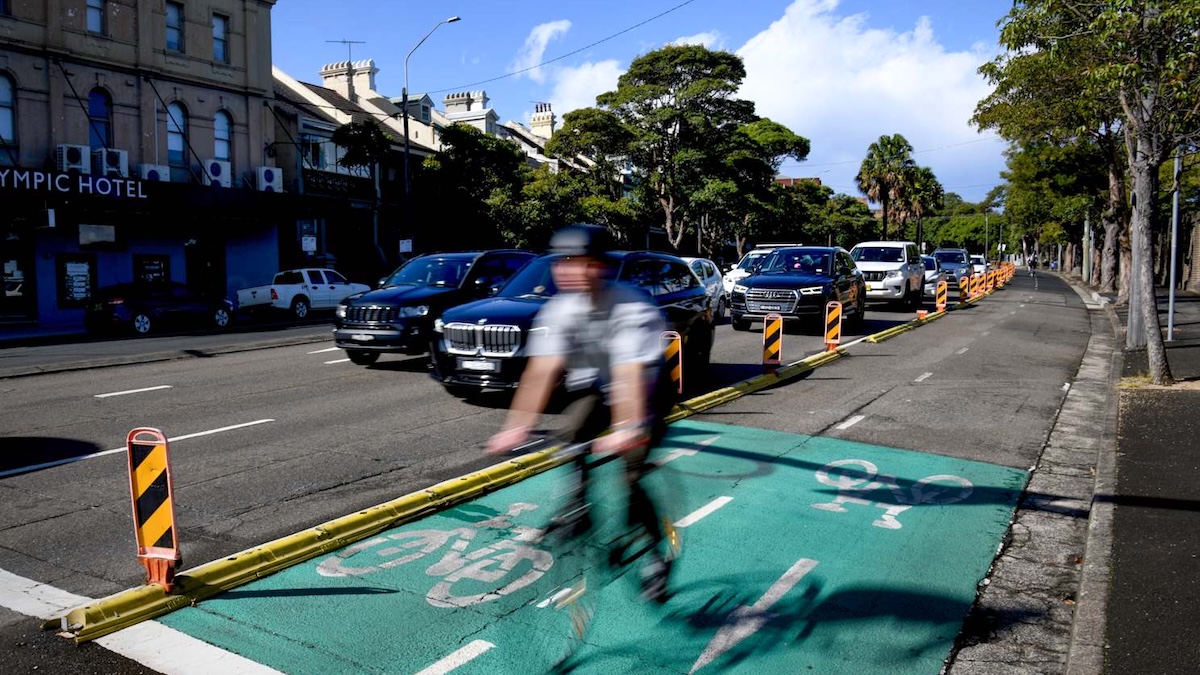
Our Plan for Pedestrian, Cycling and Traffic Calming (Sth Paddington and Centennial Park)... Submission to City of Sydney
An integrated and long-term approach needs to be taken to the design and implementation of this Plan. Transformation over a ten year period is the aim: not short-term fixes that spoil visual and heritage values.
The overall aim is that all streets and public places are made safer and more comfortable for pedestrians and cyclists to use and enjoy in a way that does not detract from heritage and streetscapes values. Such an outcome is presently far from the case. Motor traffic dominates street-space use, poses threats and adverse amenity effects. Equitable and direct ease of access for all users across and along streets is fundamental. Traffic and parking is at capacity and alternatives to driving should be fostered under the Plan.
A key consideration for the Paddington neighbourhoods – Paddington South and Paddington Urban (centred around South Dowling Street) – is heritage conservation. These areas form part of the Paddington Conservation Area as listed on the Register of the National Estate as a settlement of national significance
The key overall recommendations to satisfy pedestrian and cyclists' needs and achieve traffic calming under the Plan, are to:
• narrow carriageways where excessive widths give rise to high vehicle speeds
• create shared zones in selected lanes and appropriate speed zoning for the Village precincts
• undertake footpath widening, with attendant landscaping and improved lighting and furniture
• introduce more crossings at intersections to establish pedestrian and cycling movement continuity
• provide bi-directional bicycle roads, cycleways and lanes for key routes
• review the role of classified Main & Arterial Roads (with the RTA and in the context of light-rail, metro
an style and/or other public transport initiatives) to significantly improve pedestrian and cycling access across and along these roads
To read the full submission download the PDF below.
April 2009
by Adrian Boss
Download file
What's happening at St John's on Oxford Street?
The St John's site is a long story... in 2001 the Land & Environment Court approved a Development Application (DA) for the site, then owned by the Uniting Church, for conversion of:
1. the Church (the 1859 main building) into shops and a restaurant, 2. the Old Manse (the original 1845 Church to the west) into shops, and a cafe kiosk for 50 people at outdooor tables in the forecourt, 3. while the New Manse (1904 brick building to the east of the main Church) was proposed to be retained as a residence. 4. In addition, approval was given to build 7 new apartments in a 3-storey + attic building with 1 level of carpark under, along Renny Lane, to the south of the Church.
Residents and the Paddington Society objected to the development on several grounds, which were little heeded by the Court, though the Society was happy to see the heritage buildings restored from their run-down state.
The site was then sold to Woollahra Corporation Pty Ltd, who submitted a revised DA which was also approved by the Court (because there were many objections) in 2005. These revisions were - enlarging some apartments, adding a new entry door & ramp to the Church. The plans were developed to show an outdoor restaurant seating area with a store and bar to the north of the Old Manse onto Oxford St. Drawings showed the Church with a restaurant in the east-west transept on the ground floor and a mezzanine level, and a new excavated level for a Kitchen below. The main Church Hall is also shown to have a mezzanine level, for retail. There is also an excavated level below the cafe forecourt to the Old Manse onto Oxford St, for a Kitchen, storage and plant. The Court ruled that the Old Manse was to only be used for retail, not for a restaurant. Drawings also showed the proposed apartment building is, in effect
, 2 storeys below the Oxford St level, & 1 storey below the lowest point of the site in Renny Lane.
The hours of operation were set by the Court as 11am to midnight Monday to Saturday & 11am to 10pm Sunday for the Church restaurant, with the seating limited to max 80. The restaurant/cafe in the Old Manse forecourt had operating hours from 8am to 9pm seven days a week.
In October 2008 the DA was further revised to include more excavation to the Old Manse forecourt, and under the Old Manse itself for a larger kitchen, a lift and toilets for what appears to be a restaurant in the Old Manse, in lieu of the restaurant & excavated level under the Church transept. This application also states that the Church transept is to be modified for use as apartment
s instead of the restaurant. There is also a larger
bar in the Old Manse forecourt. At the same t
">
// -->
ime, Woo
llahra Corporation applied to the Liquor Licensing Court for 2 restaurant licences, one for 80 people in the Church, and one for 100 in the Old Manse and forecourt, with extended trading hours.
The Paddington Society objected to the proposal to install a restaurant in the Old Manse and to any extension of trading hours, as an intensification of use. The Land and Environment Court agreed and refused this part of the application in its approval on January 28 this year.
Construction started on the site on 8 October last year, and it looks like the excavation works are almost complete, except for excavation under the heritage buildings (Church or Old Manse) - see photos attached taken 21 February from Oxford St and from Renny Lane. (See excavation photo at the bottom of this story)
So, the short answer to peoples questions about the hole in the ground and what is happening: 1. shops & restaurant in the Church 2. shops in the Old Manse 3. cafe seating & kiosk in the Old Manse forecourt 4. a residence & an apartment in the New Manse 5. 7 new apartments in rear off Renny Lane
There are concerns from the Society & neighbours regarding the extent of excavation & the final use & hours of the heritage buildings. The complexity of the project, the many DAs & the liquor licensing application, make it very hard to assess what is actually going on. The new owner appears to want to increase the use of the site radically for commercial purposes.
Updated: March 1, 2009
by Linda Gosling
Download file
Pedestrian Laneways - Glenmore Road UPDATE
The proposed closure of the pedestrian laneway linking
Cooper Street with Glenmore Road raised the ire of many residents and
galvanised the community into action. Over 100 submissions and two petitions
with 556 signatures objected to the application by the owner of the land to
prevent public access, which has been used regularly for over 125 years. When the matter came before the Development Control Committee (DCC)
at Woollahra Council on 19th January, Council planners
recommended approval for the closure, citing legal advice. The gallery was packed with residents all sharing
their disbelief at the recommendation. Additional correspondence was
tabled, and the meeting was delayed for over 30 minutes while Council sought further legal advice.
Robyn Attuell, President of The Paddington Society, Bill Morrison, Vice President, John Mant former President and
several residents addressed the meeting, all logically and passionately putting their reasons for the
laneway to remain open. (Read the
Society’s addresses below.)
After further discussion
Council decided unanimously to defer its decision to erect gates at either end on the laneway and to investigate whether the public
has a legal right to use the laneway for pedestrian use; that a report be
provided to the DCC on the outcome of the investigation; and that Council make
preliminary enquiries into the feasibility and costs of either acquiring the
laneway or an interest in the laneway.
We were very satisfied with the outcome of the
meeting.
Updated: 31.07.09
by Robyn Attuell
Download file
White City... here we go again
A development application for demolition of existing buildings and construction of a tennis and recreation facility has just been lodged with Woollahra Council. For details of the plans go to www.woollahra.nsw.gov.au, bottom of the page, click on White City.
The Paddington Society and Local Community Groups convened a Public Meeting on Wednesday June 4th, 6.30pm Paddington Bowling Club, Quarry St (near Lord Dudley hotel)
The Society's concerns are about:
• Size/Scale/Footprint: Proposed is a gross floor area of 17,000 sq metre spread over a larger area. The current club house is less than 3,000 sq metres.
• Traffic & Parking: All traffic will feed through the Alma Street entrance via Lawson Street, Glenmore Road, Goodhope Street, Neild Avenue and surrounds. Proposed are 256 car spaces. The existing site has approximately 50 car spaces.
• Height: Proposed is a three and four story building. The current club house is two stories.
• General amenity due to intensification of/and type of use. We need to understand the impacts to do with noise, light, and other amenity indicators.
Submissions on the plan closed on June 14th 2008.
Traffic Management action
Traffic speeds have been exceeding the Paddington 40kph limit particularly in Cascade, Hargrave, MacDonald Streets and Neild Ave and Brown Streets. We fought for many years to have the 40kph limit because of our narrow streets and the high level of pedestrian use in our area. The RTA has recommended that extra "40" signs be painted on the road surface accompanied by the necessary speed limit signs. If reduction in speed is not achieved traffic calming devices will be installed in these streets.
For more information – click here - Minutes May 26
by Robyn Attuell
Solar Panels in Paddington
Woollahra Council has requested a report that is to consider easing controls over the installation of roof-top solar panels. This is still in preparation, but will be presented to the Council, soon. The Society is opposed to this approach and has prepared a submission setting out why this is not a good idea.
Basically, the Society sees the cluttering of roofs with solar panels will gradually ruin Paddington's roof-scape and degrade heritage values. The submission goes on to argue that there are better and cheaper alternatives available to individuals and the Council to achieving greenhouse gas emission reductions.
by Adrian Boss
Download file
Paddington Community Garden... a growing idea
The Paddington Society has been actively involved in supporting Woollahra Council and some enthusiastic local residents in the formation of the Paddington Community Garden.
Situated in Trumper Park behind the Palms Tennis Centre, this will become a place where people will be able to enjoy the company of others, grow organic vegetables and promote sustainable living practices, in a beautiful garden setting.
Membership of the garden will be open to all and more information can be found on the Woollahra Council website at : www.woollahra.nsw.gov.au/services/parks/community_gardens.
Robyn Attuell
|